
Why they matter
These medicines slow how fast your stomach empties. That's part of how they curb appetite, but it means food can still be in your stomach after the usual overnight fast. During sedation, leftover food can make the exam harder to complete and raises the small risk of inhaling stomach contents. Some studies also suggest bowel prep may be less effective in people taking them.
What current guidance says
In December 2024, anesthesia and gastroenterology societies issued joint guidance. In short:
- Most people can keep taking their medicine. Stopping it can raise blood sugar, which can itself delay a procedure.
- Switch to clear liquids for 24 hours before the procedure. For a colonoscopy, your prep day may already do this. Your team may also add a low-fiber diet for a day or two before.
- Speak up about symptoms. Nausea, vomiting, bloating or feeling full on the day of your procedure may mean your stomach isn't empty, and your team may adjust the plan or reschedule.
- Higher-risk situations get extra care, such as when you've just started the medicine or recently increased the dose.
What to do
Tell the office scheduling your procedure that you take a GLP-1 medicine, the dose and the day you take it. Don't stop it on your own. Your endoscopy team and the doctor who prescribes it will decide together whether you should keep taking it or skip a dose.
These medicines are a big step forward for many people, and with a little planning they rarely get in the way of a safe, complete exam.
— Brian Frank, MD
Questions before your procedure? Call (813) 400-0543 or send a message.
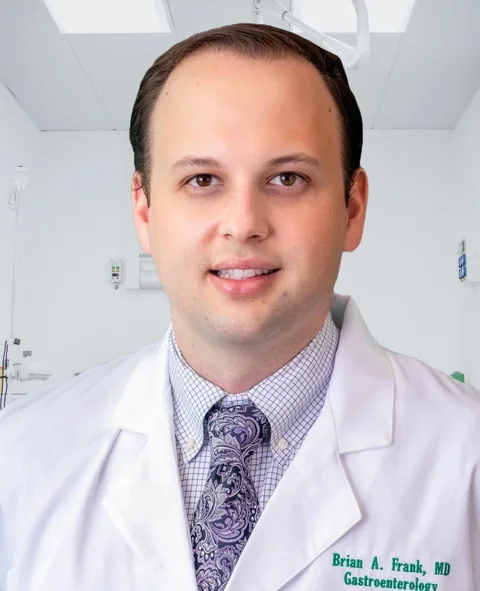
Board-certified gastroenterologist (ABIM). Published October 8, 2026.
This page is general information, not medical advice. For a medical emergency, call 911.