
Colon and rectal cancers are being found more often in people in their 40s, and screening is the most reliable way to prevent them.
Why screening works
Most colon cancers start as a polyp that grows slowly over years. A colonoscopy can find and remove those polyps before they ever become cancer. Stool tests can catch hidden blood or abnormal DNA, which flags who needs a colonoscopy.
Your options
- Colonoscopy every 10 years, if normal. It's the only test that both finds and removes polyps.
- FIT (fecal immunochemical test) every year, done at home.
- Stool DNA test (for example, Cologuard) every 3 years, done at home. The American Cancer Society's May 2026 update added newer stool DNA and stool RNA tests on the same schedule.
- CT colonography or flexible sigmoidoscopy every 5 years, less commonly used.
- Blood test: a newer option, but the American Cancer Society recommends it only for people who decline the other tests, because it misses more precancerous polyps and early cancers.
One rule matters: if a stool or blood test comes back abnormal, the screening isn't finished until you have a colonoscopy, ideally within six months.
Who should start earlier
- A parent, sibling or child with colon cancer or an advanced polyp: often start at 40, or 10 years before the age they were diagnosed
- Crohn's disease or ulcerative colitis affecting the colon
- A known inherited syndrome, such as Lynch syndrome
Screening is for people without symptoms
If you have rectal bleeding, a lasting change in bowel habits, iron-deficiency anemia or unexplained weight loss, don't wait for a screening test. See your doctor at any age.
What about cost?
Under federal rules, most private plans and Medicare cover screening from age 45, and the follow-up colonoscopy after an abnormal stool test now counts as part of screening. Some costs can still apply, such as Medicare coinsurance when a polyp is removed, so check with your plan.
If you're 45 or older and haven't been screened, ask your primary care doctor which test fits you. The best test is the one you'll actually do.
— Brian Frank, MD
Questions about screening? Call (813) 400-0543 or send a message.
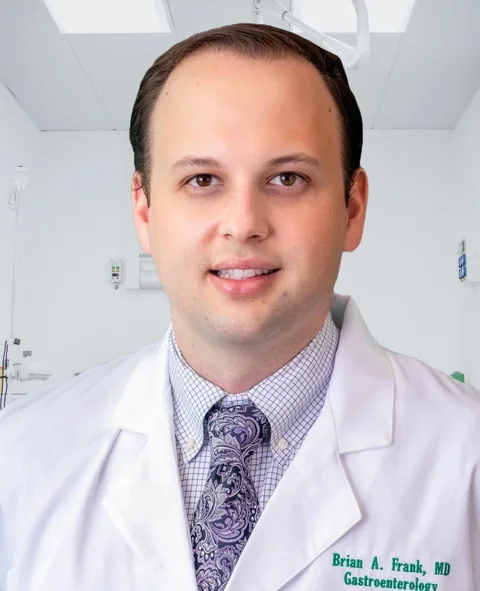
Board-certified gastroenterologist (ABIM). Published October 8, 2026.
This page is general information, not medical advice. For a medical emergency, call 911.